Tech wars for dominance go way back. One dust-up still impacts the modern world – QWERTY. When typewriters were first developed, there was no standard keyboard layout. One of the first keyboards was like a piano and had 28 keys arranged alphabetically. Another had all upper case keys. Another had keys for both upper and lower case characters.
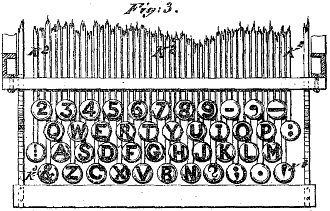
Typewriter keyboards evolved from the patented piano style design in 1868 to the standard QWERTY patented in 1878. It was built via trial and error and a healthy amount of input from telegraphers and stenographers which created a curious mythology.
The layout doesn’t resolve mechanical issues. There are no ergonomic benefits. It doesn’t slow down the operator. Rather, the QWERTY system emerged as a result of how the first typewriters were being used. Early adopters and beta-testers included telegraph operators who needed to quickly transcribe messages. However, the operators found the alphabetical arrangement to be confusing and inefficient for translating morse code. So morse code is to blame.
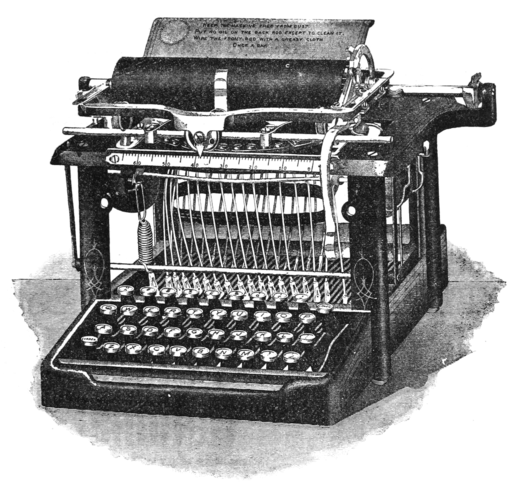
With the Remington No. 2 of 1878 (the first commercially successful typewriter) QWERTY became the dominant keyboard layout. Remington sold over 100,000 typewriters between 1874 and 1891. By 1893, it had become the universal standard keyboard layout.
By 1905, reported an estimate that 200,000 typewriters were produced in the U.S. annually. Remington arranged for typing classes creating thousands of typists all using its typewriter. QWERTY became an ouroboros. Remington typing classes on Remington QWERTY keyboards created QWERTY typists hired by businesses who purchased Remington typewriters.
QWERTY outlasted typewriter manufacturers. Smith-Corona made the last typewriter made in the US back in 1995. India’s Godrej & Boyce stopped in 2009. The last UK typewriter was made by Brother in 2012. Remington became Remington Rand and stopped making typewriters in 1955.
It lives on. Other layouts exist and claim to be more ergonomic and efficient. The QWERTY ouroboros continues to consume but its diet is different. It eats mobile phones, smart phones, remote controls, laptops and keyboards.
 code & carrot
Leave a comment