Back in the 1960s and 70s, before everyone and their uncle had Christmas lights and inflatable eye candy – the electrical holiday treat was animatronics at the mall. Our mall was no exception. There were animals and small human-like creatures who might have been dressed in Victorian clothing that populated the winding path to Santa. They sat snuggled into faux snow which looked like polyester quilt batting. It was a big deal to go to the mall and see Santa.
My memories are tangled up with elves from Christmas town and ice skating penguins. Certainly not Pingu. It was very difficult tracking down a photo. Next to the Christmas tree in the middle right of the photo, half obscured by the wood railing is an animatronic deer. To the left of it, an animatronic child which I dearly hope is not a 70s ‘Eskimo’. Then a pair of rabbits.
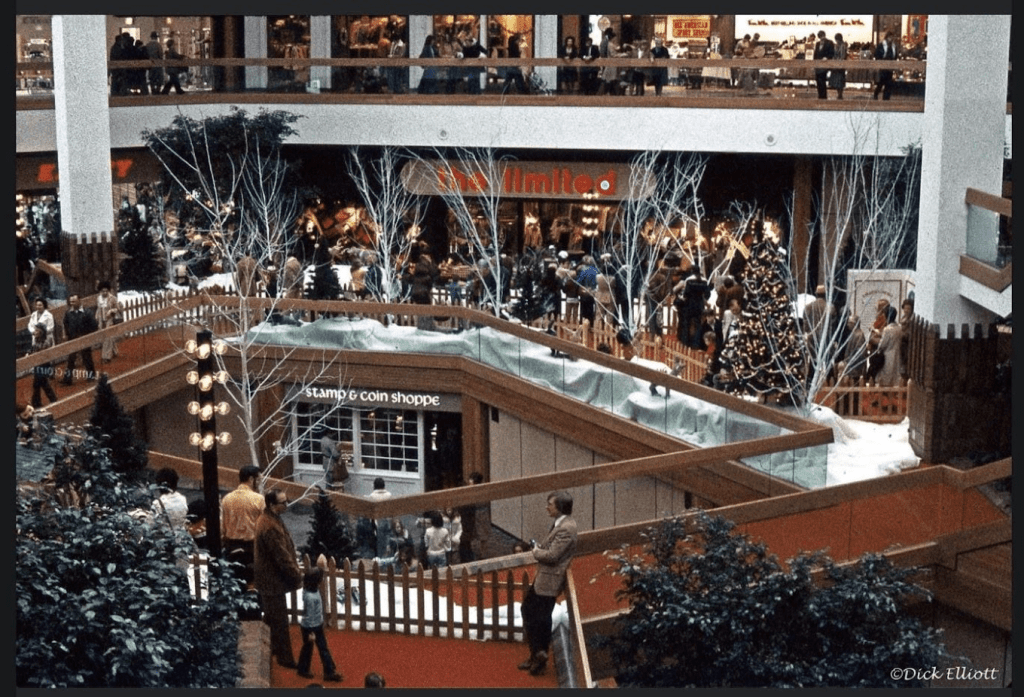
The display on the ramp with its glorious orange carpet was only a teaser to keep the long winding queue bearable.. There were more clockwork figures closer to where Santa sat. Skating children would glide on track or spin in a circle. Alas, I cannot find photos of that. Surprisingly the spark for these glorious, elaborate, electrical feats of animated fancies was ancient – glass.
Glass is a non-crystalline, often transparent, amorphous solid. It has many natural forms – volcanic obsidian, the cleverly named impactite created from meteorite impacts, lightning birthed fulgurite, and Edeowie glass created in Australia’s fiery past. Colored glass beads are the earliest evidence of glassworking – showing humans have been doing it from at least 3000 BCE in Mesopotamia. Transparent clear glass is relatively recent. Angelo Barovier came up with crystal glass in the early 1400s. The wheel of industry churned on for years until the Industrial Revolution exploded and reorganized the world.
Magical window displays sit on the shoulder of a technological marvel – plate glass. It’s a 17th century French inventory. The early production process was laborious – heating, pouring, cooling, rolling, grinding and polishing all by hand. By 1800, the industrious steam engine assisted with grinding and polishing. ‘Polished plate’ glass was expensive and still limited in size.
‘Rolled plate’ was a huge mechanical step forward. This industrially produced glass allowed for Victorian greenhouse and conservatories, light filled railway stations and the glorious Crystal Palace that graced the Great Exhibition of the Works of Industry of All Nations in 1851.
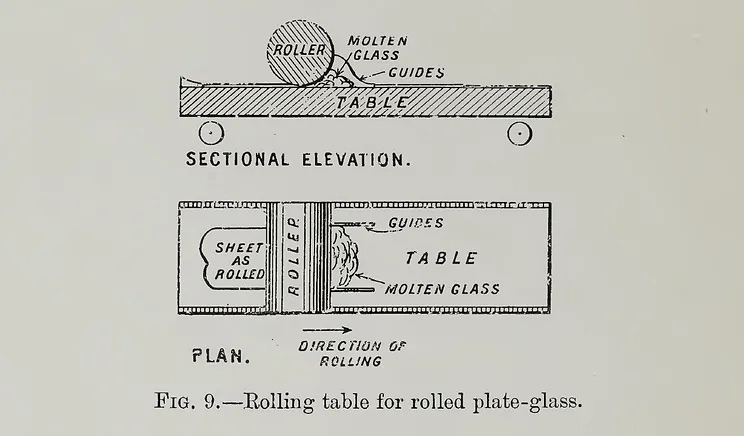
https://www.househistories.org/rolled-figured-glass
Magical department store displays were ushered in with the Pittsburgh Plate Glass company, the first US commercially successful plate glass company. Until then plate glass was imported from Europe. It was expensive and required delicate transport.
Christmas window spectacles were started by Macy’s in New York City back in 1883. Santa’s mechanical sleigh moved around a circular track as if he was being pulled by a reindeer. By the 1890s, all the big department stores, Selfridge & Co. in London or Marshall Field’s in Chicago, had Christmas window displays. Look at all that glass,
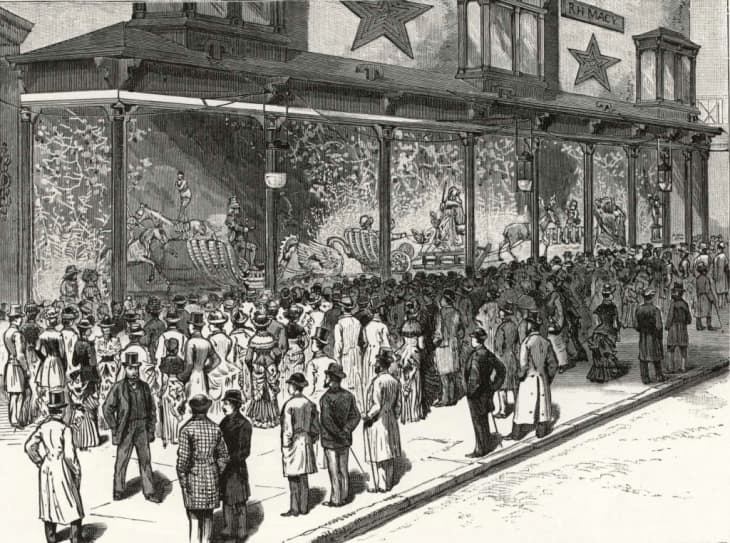
(Image credit: Collectors Weekly)
Affordable plate glass allowed window displays to spread from large cities all over the country. Animatronics became a very common part of the display. ‘A Christmas Story’ captures the delight and wonder of these displays.
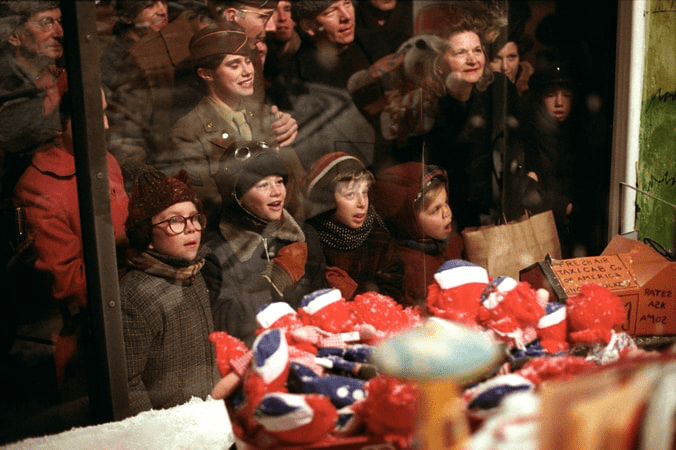
https://www.warnerbros.com/movies/christmas-story
It used to be an intrinsic part of the holiday season to travel and see the wonders of the displays in the 1980s. I got to see Christmas on the Magnificent Mile in Chicago with my friend’s family once. Water Tower Place blew my mind.
I don’t remember many elaborate window displays in my hometown. I’m sure there was something at the local shopping center but nothing like the old department stores or the new fangled malls. The remaining buildings in the old downtown had big windows but they weren’t dressed up when I was there.

 code & carrot
Leave a reply to MDK Cancel reply